Quick answer: Monthly financial reports typically arrive 3-4 weeks after the month ends. By that point, you've already made payroll, paid vendors, extended credit, and committed to expenses based on outdated data. Real-time accounting gives you current visibility into cash position so you can act on what's happening now -- not what happened last month.
This is Part 1 of the Cash Flow Intelligence Series.
You're Making Decisions on Dead Data
It's March 18. Your accountant just delivered your February financials.
You open the P&L and see it: cash collections dropped 22% in the second half of February. Three major clients slipped past 60 days on their invoices. Your accounts receivable ballooned by $47,000.
But here's the problem. You already made March decisions without this information.
You approved a new equipment lease on March 3. You hired a part-time admin on March 7. You extended net-60 terms to a new client on March 12. Each of those decisions assumed your cash position was stable -- because the last numbers you saw (January's) said it was.
Now you're looking at February's report and realizing you've been flying blind for six weeks.

This isn't a hypothetical. 88% of small businesses experience cash flow disruptions (ASBN, 2025), and the #1 cause is the same: decisions made on stale information.
The Accounting Timeline Nobody Talks About
Here's what actually happens between a transaction and the moment you see it on a report:
- Day 1-28: Transactions occur throughout the month. Revenue comes in. Bills go out. Customers pay (or don't).
- Day 29-30: Month ends. Your bookkeeper begins reconciling accounts.
- Day 31-38: Bank reconciliation, credit card statements, payroll journal entries. Only 53% of companies finish this within 6 business days (Ledge, 2025).
- Day 39-45: Accountant reviews, adjusts accruals, posts final entries. Generates reports.
- Day 46-50: You finally see the numbers. But the earliest transactions in that report are now 7 weeks old.
That means something that happened on February 1 doesn't reach your eyes until mid-to-late March. And the decisions you made throughout February and early March? Those were based on January's data -- which itself was delayed.
You're always operating 4-8 weeks behind reality.
The math on lag time: If your monthly burn rate is $80,000 and your report is 6 weeks late, you've made $120,000 worth of spending decisions without current financial data. For a healthcare practice doing $1.5M annually, that's $187,500 in decisions made blind -- every cycle.
What Changes in a Month That You Can't Afford to Miss
Monthly reports treat 30 days as a single unit. But cash doesn't move in monthly chunks. It moves daily. And a lot can go wrong in 30 days:
Customer Payment Patterns Shift
A client who paid you in 30 days last quarter is now averaging 52 days. You don't know this because your AR aging report is from last month. By the time you see it, you've extended them more credit and the balance has doubled.
For healthcare practices, this is compounded by insurance payer behavior. A payer that was reimbursing in 35 days might quietly slow to 55 days. You won't notice until the monthly report flags it -- by which point you've delivered 3-4 more weeks of services without collecting on the first batch.
Cash Position Swings Without Warning
48% of small businesses report cash flow problems (QuickBooks, 2025). But most of these aren't caused by lack of revenue. They're caused by timing. Money comes in waves. Money goes out on fixed schedules. The gap between those two rhythms is where businesses break.
A monthly report shows you the average. It doesn't show you the Wednesday when your balance dipped to $4,200 -- three days before a $23,000 payroll hit.
Overhead Creeps Unnoticed
Subscriptions auto-renew. Vendor prices increase. Lab fees tick up. Staff overtime accumulates. Each one is small. Together, they move your overhead ratio from 62% to 68% over two months -- and you don't catch it until the quarterly review, if you even do quarterly reviews.
For dental practices, where 60-80% of revenue goes to overhead, a 6-point overhead drift on a $1.2M practice is $72,000 in annual margin lost. Caught in real time, it's a conversation with a vendor. Caught 3 months later, it's a crisis.
Opportunities Pass
A supplier offers 2/10 net 30 terms: pay within 10 days, save 2%. On $300,000 in annual purchases, that's $6,000 in free savings. But you can't take advantage of early-pay discounts if you don't know your current cash position. You default to net-30 because you're not sure you can afford the early payment.
A colleague refers you a $15,000/month client, but they need you to start immediately and bill in arrears. Can you float 45 days of unbilled work? Your monthly report says you have $90,000 in the bank -- but that was 3 weeks ago, before payroll and quarterly tax estimates hit.
The Real Cost of "Good Enough" Monthly Reporting
Business owners tolerate monthly reporting because it feels normal. Every firm does it. It's how accounting has worked for decades.
But "normal" has a cost. Here's what monthly-only visibility actually costs a typical service business or healthcare practice:
| Impact Area | Monthly Reporting | Real-Time Visibility |
|---|---|---|
| Collections response time | Notice late payers 4-6 weeks after they slip | Flag at 3 days past due |
| Cash shortfall warning | Find out after the shortfall hits | See it 2-3 weeks before it arrives |
| Overhead drift | Catch it at quarterly review (if you do one) | See cost-category trends weekly |
| Payroll confidence | "I think we can cover it" (based on gut) | Know the exact cash runway at any time |
| Growth decisions | Wait for the monthly close to feel confident | Decide this week with current data |
| DSO tracking | See average DSO once a month | Track DSO by client, updated daily |
| Emotional cost | Anxiety between reports ("Are we OK?") | Confidence from knowing the numbers |
A study from SCORE found that 82% of business failures are linked to cash flow mismanagement -- not lack of demand, not bad products, not weak sales. Cash timing kills more businesses than competition does.
Monthly reporting doesn't cause that failure directly. But it removes your ability to prevent it.
What "Real-Time" Actually Means (It's Not What You Think)
Real-time accounting doesn't mean your P&L updates every second like a stock ticker. That would be noise, not signal.
Here's what it actually means in practice:
- Daily data sync: Transactions from your accounting system (QuickBooks, Xero) are pulled and reconciled every 24 hours -- not every 30 days.
- Live dashboard: Key metrics -- cash position, AR aging, revenue trend, overhead ratio -- are visible on a dashboard you can check anytime from your phone.
- AI-powered alerts: Instead of reading a 12-page report and hoping you spot the problem, the system flags anomalies: "Client X is 15 days past due," "Cash runway drops below 3 weeks on March 22," "Overhead ratio exceeded 65% threshold."
- Weekly synthesis: Your accountant doesn't disappear until month-end. They review the data weekly and reach out when something needs attention -- before you have to ask.
The monthly close still happens. You still need formal, reconciled financials for tax returns, audits, and lender reporting. But the decisions don't wait for the close. The decisions happen in real time, informed by current data.
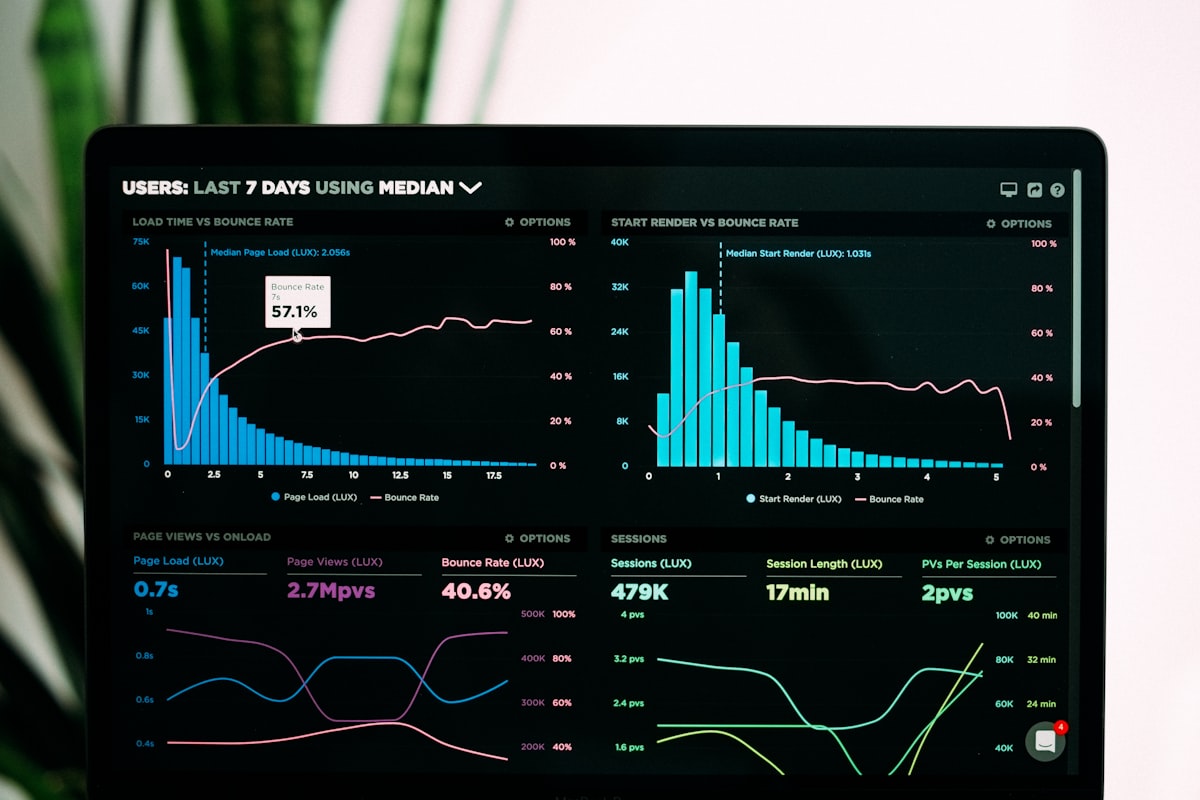
Proactive vs. Reactive: What Kind of Accountant Do You Have?
This is the question 61% of dentists and a growing number of healthcare practice owners are starting to ask (Dental Economics, 2023). Not "is my accountant accurate?" -- accuracy is table stakes. The question is: "Does my accountant help me see problems before they happen, or do they just report on what already happened?"
| Reactive Accountant | Proactive Accountant |
|---|---|
| Delivers reports 3-4 weeks after month-end | Monitors data continuously; alerts you within days |
| You discover cash flow gaps after they hit | You see cash gaps forming 2-3 weeks before they arrive |
| Calls you at tax time | Calls you when something needs your attention |
| Answers the question "What happened?" | Answers the question "What's about to happen?" |
| Uses Excel and PDF reports | Uses live dashboards and AI-powered analysis |
| You adapt to their schedule | Their system adapts to your cash cycle |
Neither is wrong. Reactive accounting keeps you compliant, filed, and auditable. It's what 95% of firms offer because it's the model that's existed for decades.
But if you're making real cash decisions -- hiring, expanding, leasing, extending credit -- a reactive model means you're always operating on a delay. You're driving by looking in the rearview mirror.
How to Transition (Without Blowing Up Your Current System)
You don't need to fire your accountant and rebuild from scratch. Real-time visibility is an addition to your existing setup, not a replacement. Here's a practical path:
Step 1: Start with One Dashboard
Don't try to track everything in real time. Start with the 5 metrics that actually drive cash decisions:
- Current cash position (bank balance minus pending outflows)
- Accounts receivable aging (who owes you, and how late)
- Days Sales Outstanding (how fast you collect, on average)
- Cash runway (at current burn rate, how many weeks until $0)
- Revenue vs. last month (trend line, not just a number)
If you're a healthcare practice, add: collections rate by payer and overhead ratio. Those two metrics alone can reveal $50,000+ in annual leakage.
Step 2: Keep Monthly Close for Compliance
Your tax returns, bank covenants, and audit trail still need a formal monthly close. Don't abandon it. But stop treating the monthly P&L as your primary decision-making tool. It's a compliance document, not an operating dashboard.
Step 3: Ask Your Accountant the Hard Question
Ask: "If my biggest client stops paying tomorrow, how quickly would you know -- and how quickly would you tell me?"
If the answer is "we'd see it at month-end close," you have a reactive accountant. That's not a judgment -- it's a fact about their operating model. The question is whether that model matches the speed at which your business needs to make decisions.
Step 4: Evaluate AI-Powered Alternatives
A growing number of accounting firms now use AI to synthesize financial data in real time. They connect directly to your QuickBooks or Xero instance, run daily analysis, and surface insights through dashboards and alerts. The monthly close still happens -- but the cash-critical information doesn't wait for it.
This isn't a technology play. It's a service model change. The AI does the monitoring. The accountant does the interpreting. You get the insight when it matters -- not 6 weeks later.

The Bottom Line
Monthly reports aren't bad. They're necessary. But they were designed for compliance -- tax filings, audits, lender packages. They were never designed to be your cash decision-making tool.
The problem is that for most small businesses, the monthly P&L is the only financial document they see. It's doing double duty: compliance tool and operating dashboard. And it fails at the second job because it's structurally too slow.
The shift isn't complicated: Keep monthly reports for compliance. Add real-time visibility for decisions. Separate the two jobs so each one gets done properly.
If you own a healthcare practice, a service business, or any company where cash timing matters -- and it always does -- the question isn't whether monthly reporting is "good enough." The question is: how many decisions did you make this month that would have been different if you'd had current data?
The answer is probably more than you think.
See your cash position in real time -- not next month. Benefique builds AI-powered financial dashboards for healthcare practices and service businesses. Real-time data. Proactive alerts. No more flying blind.
Schedule a Cash Flow Assessment
Frequently Asked Questions
How long does it take most small businesses to close their books each month?
Only 53% of companies close their books within 6 business days of month-end. Many small businesses don't see final financial reports until 3-4 weeks after the month ends, meaning decisions are made on data that is already a month old.
What is the difference between a proactive and reactive accountant?
A reactive accountant delivers historical reports after the fact -- you find out about problems after they've already happened. A proactive accountant uses real-time data and AI-powered analysis to identify cash flow issues before they become crises, enabling you to act on current information rather than outdated numbers.
What is real-time accounting for small businesses?
Real-time accounting means your financial data is continuously updated and synthesized -- typically within 2-4 hours of transactions occurring -- rather than compiled once a month. It gives business owners current visibility into cash position, accounts receivable, and key performance metrics through live dashboards instead of static PDF reports.
Why do healthcare practices need real-time financial reporting?
Healthcare practices face a structural cash flow challenge: insurance reimbursements take 30-90 days, but payroll, rent, and equipment leases are due immediately. Monthly reports arrive too late to manage this timing gap. Real-time reporting lets practice owners see their true cash position daily, track claim status by payer, and anticipate shortfalls before they hit.
How often should a small business review financial reports?
For cash-critical decisions like payroll, vendor payments, and collections, weekly or even daily visibility is ideal. Monthly reports are still valuable for tax compliance, audits, and trend analysis. The best approach is a real-time dashboard for operational decisions, with monthly close for formal reporting.
Can I switch from monthly to real-time accounting without changing my accountant?
It depends on your accountant's capabilities. Traditional firms are set up for batch processing -- they close your books once a month and deliver reports. Firms that use AI-powered data synthesis and live dashboards can provide real-time visibility without overhauling your existing systems. Ask your accountant whether they offer continuous monitoring or only periodic reporting.
Cash Flow Intelligence Series:
- Introduction: AI-Powered Cash Flow Intelligence
- Part 1: Why Monthly Reports Are Too Late for Cash Decisions (You are here)
- Part 2: 5 Ways to Improve Your DSO Without Sacrificing Relationships
- Part 3: How AI Cash Flow Forecasting Helps Small Businesses Stay 30 Days Ahead
- Part 4: How to Calculate Your Cash Conversion Cycle
- Part 5: Real-Time Financial Dashboards for Healthcare Practices
Disclaimer: This article is for informational purposes only and does not constitute tax, legal, or financial advice. Tax situations vary -- consult a qualified tax professional for advice specific to your circumstances.
Benefique Tax & Accounting | Davie, FL | Serving healthcare practices and service businesses across South Florida