Quick answer: If your practice has high fixed overhead — rent, equipment leases, staff salaries, malpractice insurance — then your profitability is controlled by volume, not costs. There's a specific number of patients, claims, or cases per month where you cross from loss to profit. Below that number, every month is a loss. Above it, every additional patient flows to your bottom line at near-100% margin. Most accountants report "you lost money this month." The right analysis tells you "you need 70 more patients to never lose money again." And the number your accountant should be watching isn't just your P&L breakeven — it's your cash flow breakeven, which is almost always higher.
This is Part 6 of the Cash Flow Intelligence Series.
141 Scans. That's It.
An imaging center we work with lost $5,000 in January.
Same staff as December. Same rent. Same equipment leases. Same malpractice insurance. Same billing company. Nothing changed — except volume. They performed 590 scans.
In February, they performed 731 scans. Same staff. Same rent. Same everything.
February profit: +$12,000.
The swing: $17,000. The cause: 141 additional scans.
Interactive Tool: Want to model your own numbers? Our Concierge Medicine Financial Simulator lets you adjust membership fees, patient volume, and costs — and see your P&L and cash flow waterfall update in real time.
No one was hired. No one was fired. No lease was renegotiated. No equipment was purchased or sold. The practice didn't cut a single dollar in costs. It just saw more patients.
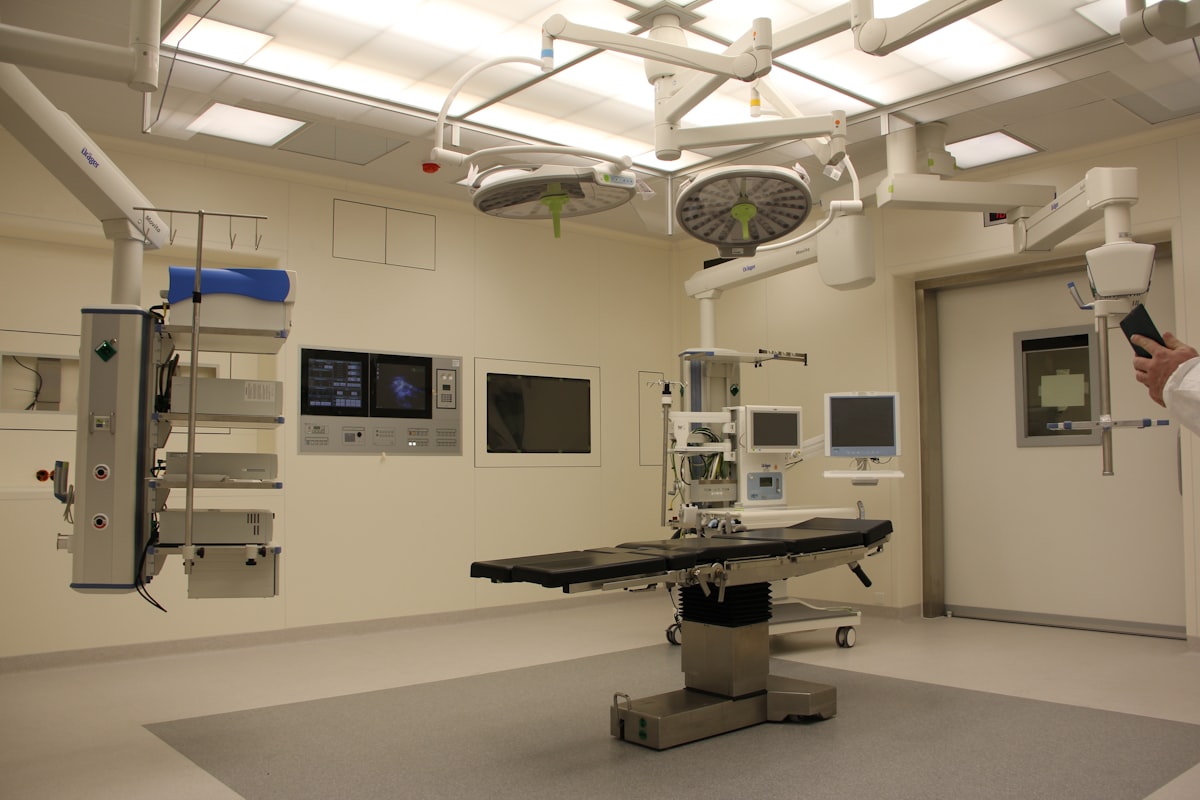
This is what a fixed-cost business looks like — what finance textbooks call operating leverage. And if you own a medical practice, a dental office, a radiology group, a veterinary clinic, a law firm, or any service business where your overhead doesn't change much month to month — this is your business too. According to MGMA, the median multi-specialty practice spends 60-65% of revenue on fixed overhead. That means most of your cost structure doesn't move — but your profit swings wildly with volume.
The question isn't "how do I cut costs?" The question is: "How many more patients do I need?"
And the answer is a specific number. Not a feeling. Not a goal. A number you can calculate today from data already sitting in your QuickBooks. The U.S. Small Business Administration calls breakeven analysis "one of the most important business calculations" — but most guides stop at the formula. They don't show you what to actually do with the number.
Why Most Accountants Miss This
Here's what a typical monthly financial report tells you:
"Revenue: $230,000. Expenses: $235,000. Net loss: ($5,000)."
That's accurate. It's also useless.
It tells you what happened. It doesn't tell you why. And it definitely doesn't tell you what to do about it.
The accountant who sends you that report is doing their job — recording history. But the accountant who tells you "your breakeven is 660 claims per month, you hit 590, and you need 70 more to never lose money again" — that's a different conversation entirely.
The first report makes you think about cutting costs. You start eyeing staff reductions, renegotiating leases, switching billing companies. All of which are painful, slow, and in many cases counterproductive — because cutting the wrong cost can reduce your capacity to generate the volume you actually need.
The second analysis makes you think about volume. How do I get 70 more patients? Can I extend hours one day a week? Do I need another referring physician? Is there a payer I'm not credentialed with? Can my existing staff handle it?
Different question. Different answer. Different outcome.
Monthly reports that arrive 4-6 weeks late make this worse. By the time you see January's loss, you're already halfway through March. The volume problem that caused the loss might have already corrected itself — or it might have gotten worse. You have no idea, because you're making decisions on data that's six weeks old.
The Fixed-Cost Breakeven Formula (Made Simple)
Every business has two kinds of costs:
Fixed costs don't change with volume. Rent, equipment leases, base staff salaries, malpractice insurance, software subscriptions, loan payments. Whether you see 100 patients or 1,000, these costs stay roughly the same.
Variable costs change with every patient or case. Medical supplies, lab fees, billing company percentages, credit card processing. The more patients you see, the more these cost.
The breakeven formula:
Breakeven Volume = Fixed Costs / (Revenue per Unit - Variable Cost per Unit)
That denominator — revenue per unit minus variable cost per unit — is called your contribution margin. This is the core concept in cost-volume-profit (CVP) analysis, and it's the amount each additional patient, scan, case, or engagement contributes toward covering your fixed costs.
Once your fixed costs are covered, every additional unit of volume drops to your bottom line at the full contribution margin. That's why the profit swing is so dramatic once you cross the threshold.
Real Numbers: The Imaging Center
Let's walk through the math with real (anonymized) data:
| Component | Amount |
|---|---|
| Monthly fixed costs (rent, staff, equipment, insurance) | $257,000 |
| Average revenue per scan | $414 |
| Variable cost per scan (supplies, billing %) | $25 |
| Contribution margin per scan | $389 |
| Breakeven volume | 661 scans/month |
At 590 scans (January): 590 × $389 = $229,510 contribution. Minus $257,000 fixed costs = -$27,490 operating loss. (Actual reported loss was smaller due to some revenue timing — but the math tells the story.)
At 731 scans (February): 731 × $389 = $284,359 contribution. Minus $257,000 fixed costs = +$27,359 operating profit.
The difference: 141 scans × $389 contribution margin = $54,849 swing in contribution. That's the power of operating above versus below your breakeven line.
The Trap: Why Owners Cut Costs Instead of Adding Volume
When you see a loss on your P&L, the instinct is to cut.
It feels responsible. It feels prudent. It feels like the "business" thing to do.
But run the math on cost-cutting versus volume growth in a fixed-cost business:
Option A: Cut $10,000 in Monthly Costs
You renegotiate a lease, reduce a staff position, or switch vendors. Your breakeven drops from 661 scans to 635 scans (saving $10,000 / $389 per scan = ~26 fewer scans needed).
The trade-offs:
- Took 2-3 months to negotiate
- May reduce your capacity to handle volume when it returns
- Staff morale impact
- Possibly degraded patient experience
- Savings: $10,000/month
Option B: Add 26 Scans Per Month
You extend operating hours on Thursdays, credential with one additional payer, or have your referral coordinator contact three new physician offices.
The trade-offs:
- Can often be implemented within weeks
- Doesn't reduce capacity — actually increases it
- No morale impact
- Potentially improves market position
- Revenue impact: 26 × $389 = $10,114/month in additional contribution margin
Same financial impact. Completely different trajectory.
Option A makes your business smaller. Option B makes it stronger.
This is the trap. Cost-cutting feels like progress, but in a fixed-cost business, it's the slower and riskier lever. The math overwhelmingly favors volume growth — as long as you have the capacity to serve it. And in most practices operating below breakeven, you do have that capacity. That's the whole point. Your fixed costs already pay for staff and equipment that are sitting partially idle.
The imaging center in our example had equipment running at roughly 65% utilization in January. They didn't need more equipment to handle February's volume. They didn't need more staff. They just needed more patients on the schedule.
Three Industries, Same Trap
1. Diagnostic Imaging Center (Real Data)
You've seen this one. Monthly fixed costs of $257,000. Breakeven at 661 scans. The difference between a $5,000 loss and a $12,000 profit was 141 scans — about 7 per business day.
The lever: Referral development. One new referring physician sending 3-4 patients per week changes the math entirely. That's not a marketing campaign. That's one lunch meeting.
2. Dental Practice
A general dental practice in South Florida with two operatories and one associate dentist. The American Dental Association reports that average dental practice overhead runs 59-62% of collections — with staff costs alone at 25-30%. Nearly all of that is fixed:
| Component | Amount |
|---|---|
| Monthly fixed costs (rent, staff, equipment, insurance) | $68,000 |
| Average revenue per patient visit | $285 |
| Variable cost per visit (supplies, lab, billing) | $45 |
| Contribution margin per visit | $240 |
| Breakeven volume | 284 patient visits/month |
At 260 visits (a slow month): operating loss of -$5,600. At 310 visits (a normal month): operating profit of +$6,400.
The swing: 50 visits × $240 = $12,000. That's roughly 2.5 additional patients per day. Not a massive growth initiative. A scheduling optimization. Better recall systems. One more hygiene day per week.
Most dental consultants will tell a practice owner making $68,000 in overhead to "cut costs." The math says: find 2.5 more patients per day.
3. IT Managed Services Provider
A Broward County MSP with 4 technicians serving business clients on monthly retainers:
| Component | Amount |
|---|---|
| Monthly fixed costs (office, staff, tools, insurance) | $52,000 |
| Average monthly revenue per client | $2,800 |
| Variable cost per client (licenses, escalations) | $350 |
| Contribution margin per client | $2,450 |
| Breakeven volume | 22 clients |
At 19 clients: operating loss of -$5,450/month. At 24 clients: operating profit of +$6,800/month.
The swing: 5 clients × $2,450 = $12,250. For a service business, that's one good quarter of sales effort — not a multi-year growth plan.
Every one of these businesses has the same structure: high fixed costs that don't scale with volume, and a contribution margin that makes every unit above breakeven enormously valuable. The first 660 scans pay the bills. Scan 661 starts making money.
Two Breakeven Numbers Every Practice Owner Needs
Here's where most breakeven analysis stops — and where the real insight begins.
Everything above is P&L breakeven: the volume where your revenue covers your expenses on the income statement. It's the number every accounting textbook teaches. And it's incomplete.
Your practice also has a cash flow breakeven — the volume where cash coming in the door actually covers cash going out. This number is almost always higher than your P&L breakeven, and it's the one that determines whether you can make payroll.
Why They're Different
Your P&L doesn't show:
- Loan principal payments. You might have $15,000/month in debt service. The interest portion shows as an expense. The principal portion doesn't — but it still leaves your bank account.
- Owner draws and distributions. Not an expense on the P&L. Definitely cash out the door.
- Equipment purchases and deposits. Capitalized, not expensed. But you paid for them.
- AR timing. You performed 731 scans in February, but insurance companies pay in 45-60 days. Your P&L says +$12,000 profit. Your bank account might still be declining because January's low-volume collections are what's actually arriving.
The Math
Using our imaging center:
| Breakeven Type | Calculation | Monthly Volume |
|---|---|---|
| P&L breakeven | $257,000 fixed costs / $389 contribution | 661 scans |
| + Debt service (principal portion) | Add $18,000/month | 707 scans |
| + Owner distributions | Add $10,000/month | 733 scans |
| Cash flow breakeven | Total cash outflows / $389 contribution | ~733 scans |
The P&L says you're profitable at 661 scans. Cash flow says you need 733 scans before your bank account stops shrinking.
That February with 731 scans? The P&L showed a $12,000 profit. But with debt service and owner draws factored in, the practice was still 2 scans short of cash flow breakeven. Profitable on paper. Still consuming cash in reality.
This is the "profitable but broke" scenario. And it's the single most common financial blind spot in healthcare practices.

Your accountant gives you P&L breakeven. Your fractional CFO gives you cash flow breakeven. One of these keeps you informed. The other keeps you solvent.
The AR Lag Makes It Worse
Even after you cross cash flow breakeven in volume, there's a timing delay. Insurance reimbursements for February's 731 scans arrive in April. So February's cash position is actually driven by December and January collections — the months when volume was below breakeven.
This is why practices can be above breakeven in volume for two consecutive months and still feel cash-strapped. The collections haven't caught up to the volume yet. Without real-time dashboard visibility into your collections pipeline, you can't tell whether the cash squeeze is a structural problem (you're below breakeven) or a timing problem (you're above breakeven but collections haven't landed yet).
The distinction matters enormously. A structural problem means you need more volume. A timing problem means you need to manage your cash runway for 60 more days until collections normalize. Different diagnosis, different treatment. Your monthly P&L can't tell you which one you have.
How to Find YOUR Breakeven Number
You can calculate both breakeven numbers from data already in your QuickBooks. Here's how:
Step 1: Identify Your Fixed Costs
Pull your P&L for the last 6 months. Look for line items that stayed roughly the same regardless of how busy you were:
- Rent / mortgage
- Staff salaries (not per-diem or hourly workers who scale with volume)
- Equipment leases
- Malpractice / liability insurance
- Software subscriptions (EHR, practice management, billing platform)
- Utilities
- Loan interest
Add them up. That's your monthly fixed cost base.
Step 2: Identify Your Variable Costs
These are the costs that moved with volume:
- Medical / dental supplies
- Lab fees
- Billing company fees (if percentage-based)
- Credit card processing
- Per-diem or contract labor
- Shipping / courier costs
Calculate the average variable cost per patient visit, scan, case, or engagement.
Step 3: Calculate Your Contribution Margin
Average revenue per unit - Average variable cost per unit = Contribution margin
For the imaging center: $414 - $25 = $389 per scan.
Step 4: Calculate P&L Breakeven
Monthly fixed costs / Contribution margin = Breakeven volume
$257,000 / $389 = 661 scans.
Step 5: Calculate Cash Flow Breakeven
Add to your fixed costs:
- Loan principal payments (check your amortization schedule)
- Owner draws / distributions (average of last 6 months)
- Any other recurring cash outflows not on the P&L
(Fixed costs + Non-P&L cash outflows) / Contribution margin = Cash flow breakeven
($257,000 + $28,000) / $389 = 733 scans.
Step 6: Compare to Actual Volume
Pull your monthly patient/scan/case count for the last 12 months. Plot it against both breakeven lines. You'll see immediately:
- Which months you were above and below each threshold
- Whether volume is trending up or down
- How far you are from each breakeven point right now
- Exactly how many additional units you need to reach profitability
This is the analysis that changes the conversation from "we're losing money" to "we need 70 more patients."
What Changes When You Monitor This Monthly
Calculating your breakeven once is useful. Monitoring it monthly is transformational.
Here's why: your breakeven number isn't static. Fixed costs shift — a lease renewal, a new hire, an insurance rate increase. Variable costs change — a new supplier, a billing company fee change. Revenue per unit moves — payer mix shifts, fee schedule renegotiations, changes in reimbursement patterns.
If you calculated your breakeven in January and don't recalculate until July, you could be operating on a number that's 30-50 units off. In a business where 141 units is the difference between loss and profit, that matters.
This is where AI-powered cash flow forecasting changes the game. Instead of a one-time spreadsheet exercise, your breakeven analysis runs continuously against your live QBO data:
- Volume tracking: Are you trending above or below breakeven this month, based on data through today — not data from 6 weeks ago?
- Threshold alerts: "You're at 580 scans through the 20th. At current pace, you'll finish the month at 638 — 23 scans below P&L breakeven and 95 below cash flow breakeven."
- Sensitivity analysis: "If your new payer contract reduces average revenue per scan by $15, your breakeven increases from 661 to 683 scans."
- Trend detection: "Volume has declined 4% per month for 3 consecutive months. At this rate, you'll cross below breakeven in May."
Most accountants tell you "you lost money last month." AI monitoring tells you "you're going to lose money next month unless volume increases by 45 scans." One is a history report. The other is a decision tool.
The insight isn't the number. It's the monitoring. Any accountant can calculate breakeven once. The value is in watching it continuously, catching the drift before it becomes a crisis, and telling you the specific volume target that turns loss into profit — every month, in real time.
The Volume Playbook: 5 Ways to Add Patients Without Adding Costs
Once you know your breakeven gap, the question becomes tactical. Here are five approaches that increase volume without increasing fixed costs — because your fixed costs already pay for the capacity:
1. Extend Hours, Don't Add Space
If your equipment and staff can handle more patients but you're only open 8-5, adding one early morning or late afternoon session per week can yield 15-25 additional visits per month at near-zero incremental cost.
2. Referral Development (Healthcare-Specific)
For imaging centers and specialty practices, one new referring physician sending 3-5 patients per week generates 12-20 additional monthly visits. The cost: your time at a lunch meeting. The return: potentially $4,680-$7,800/month in contribution margin.
3. Reduce No-Shows and Cancellations
The average medical practice has a 15-20% no-show rate. If you're scheduled for 800 visits and 160 don't show, you're performing 640 — potentially below breakeven. Automated reminders, waitlist systems, and same-day fill protocols can recover 30-50% of those slots. That's 48-80 recovered visits per month.
4. Payer Credentialing
If you're not credentialed with every major payer in your market, you're turning away patients. Each new payer credential opens a pool of potential patients who currently can't see you. This is especially relevant for practices in markets with a dominant payer you haven't contracted with.
5. Reactivate Dormant Patients
For dental and primary care practices, your patient database contains hundreds of patients who haven't been seen in 12+ months. A recall campaign targeting these patients is the cheapest marketing you can do — they already know you, they're already in your system, and they need the care.
None of these require hiring. None require new equipment. None require new space. They all leverage the fixed-cost infrastructure you're already paying for — the infrastructure that's sitting partially idle when you're below breakeven.

Frequently Asked Questions
What is fixed-cost breakeven analysis?
Fixed-cost breakeven analysis calculates the specific volume of patients, cases, or units your business needs to cover all fixed costs (rent, staff, equipment, insurance) for the month. Below this volume, you lose money regardless of how efficiently you operate. Above it, every additional unit contributes directly to profit at your full contribution margin. For a healthcare practice with $257,000 in monthly fixed costs and a $389 contribution margin per patient, breakeven is 661 patients per month.
What's the difference between P&L breakeven and cash flow breakeven?
P&L breakeven is the volume where revenue equals expenses on your income statement. Cash flow breakeven is the volume where cash inflows actually cover all cash outflows — including loan principal, owner draws, equipment payments, and the timing lag from accounts receivable. Cash flow breakeven is almost always higher. A practice can be profitable on the P&L but still running out of cash because debt service, owner distributions, and AR delays aren't reflected in the income statement.
Why is volume more effective than cost-cutting for profitability?
In a fixed-cost business, cutting $10,000 in costs reduces your breakeven by about 25 units (at a $389 contribution margin). But adding 25 units generates $10,000 in additional contribution margin — the same financial impact — while preserving your capacity to grow further. Cost-cutting has a floor (you can't cut below minimum operating requirements) and often takes months to implement. Volume growth can begin immediately and has no theoretical ceiling up to your capacity limit.
How do I calculate breakeven for my medical practice?
Pull 6 months of P&L data from QuickBooks. Separate fixed costs (rent, salaries, insurance, leases) from variable costs (supplies, lab fees, billing percentages). Calculate your average revenue per patient visit and subtract the average variable cost to get your contribution margin. Divide total monthly fixed costs by the contribution margin. The result is your P&L breakeven in patient visits. For cash flow breakeven, add loan principal payments and owner draws to the fixed cost number before dividing.
How often should I recalculate my breakeven point?
Monthly. Your breakeven number shifts as fixed costs change (new hires, lease renewals, insurance rate increases), variable costs shift (new suppliers, billing fee changes), and revenue per unit moves (payer mix changes, fee schedule renegotiations). A breakeven number calculated in January can be 30-50 units off by July. AI-powered monitoring recalculates continuously against live data, so you always know your current threshold.
What utilization rate do I need to reach breakeven?
This varies by practice, but most healthcare practices break even at 60-70% utilization of their existing capacity. If your staff and equipment can handle 1,000 patients per month and your breakeven is 661, you need 66% utilization. The key insight: you're already paying for 100% of the capacity. Every percentage point of utilization above breakeven is nearly pure profit.
Stop Guessing. Start Counting.
Your practice doesn't have a profit problem. It has a volume problem with a specific number attached to it.
That number is sitting in your QuickBooks data right now. It tells you exactly how many more patients, scans, cases, or clients you need to cross from loss to profit — and from P&L profit to actual positive cash flow.
The question is whether anyone is calculating it for you. And whether they're watching it every month, or once a year.
Benefique uses AI-powered cash flow forecasting to monitor breakeven thresholds continuously for healthcare practices and service businesses. Not a one-time spreadsheet. A living analysis that updates with every transaction in your QBO, alerts you when volume trends toward breakeven, and tells you the exact number you need to hit — before the month is over, not six weeks after.
Find Your Breakeven Number — Schedule a Cash Flow Assessment
Cash Flow Intelligence Series
- Introduction: AI-Powered Cash Flow Intelligence
- Part 1: Why Monthly Reports Are Too Late for Cash Decisions
- Part 2: 5 Ways to Improve Your DSO Without Sacrificing Relationships
- Part 3: How AI Cash Flow Forecasting Helps Small Businesses Stay 30 Days Ahead
- Part 4: How to Calculate Your Cash Conversion Cycle
- Part 5: Real-Time Financial Dashboards for Healthcare Practices
- Part 6: Your Practice Doesn't Have a Profit Problem — It Has a Volume Problem (You are here)
Disclaimer: This article is for informational purposes only and does not constitute tax, legal, or financial advice. All financial scenarios are anonymized composites based on real client engagements. Tax situations vary — consult a qualified tax professional for advice specific to your circumstances.
Last updated: March 21, 2026 | Benefique Tax & Accounting | Davie, FL Serving healthcare practices and service businesses across South Florida